Everything I Told You Was True
How True Facts Mislead Us and How to See What’s Missing. A trade nonfiction project about the harder information problem: when the facts are accurate but the picture they create is not.

Nothing in the warning has to be false.
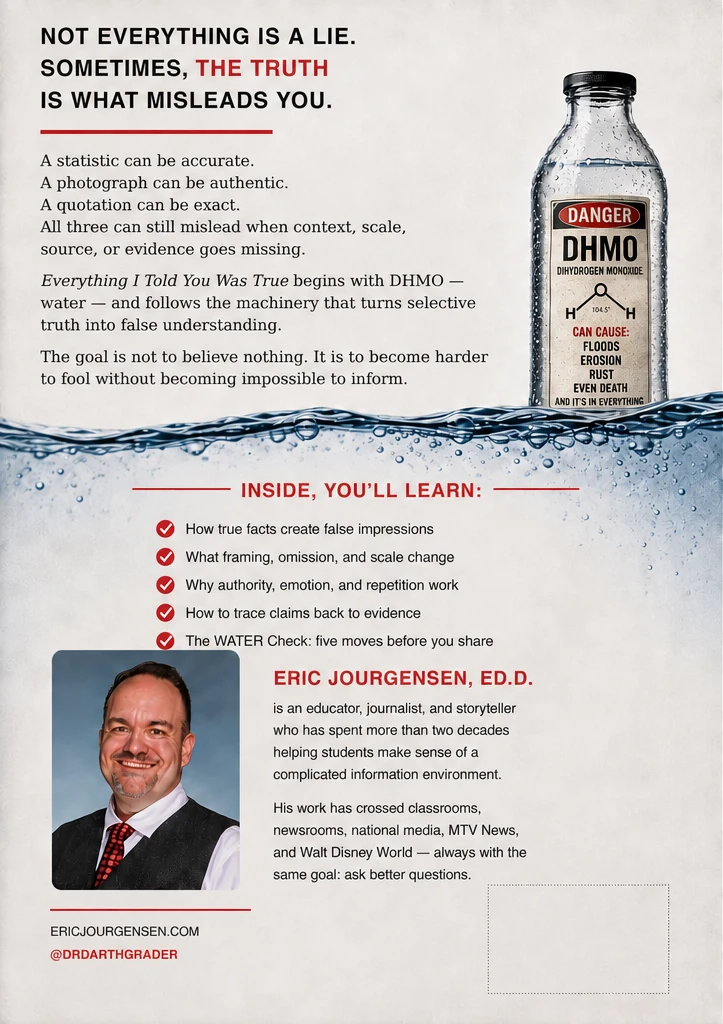
Dihydrogen monoxide contributes to erosion. In gaseous form it can cause severe burns. Inhalation can be fatal. It is used in nuclear power plants. It is also water.
The reveal is not the lesson. The lesson is how selection, framing, unfamiliar language, emotional cues, and missing context can manufacture a false understanding from true statements.
The warning is only half the story.
The front gives you the warning. The back gives you the missing context. Together, they make the book’s point before page one: true facts can still lead you somewhere false.
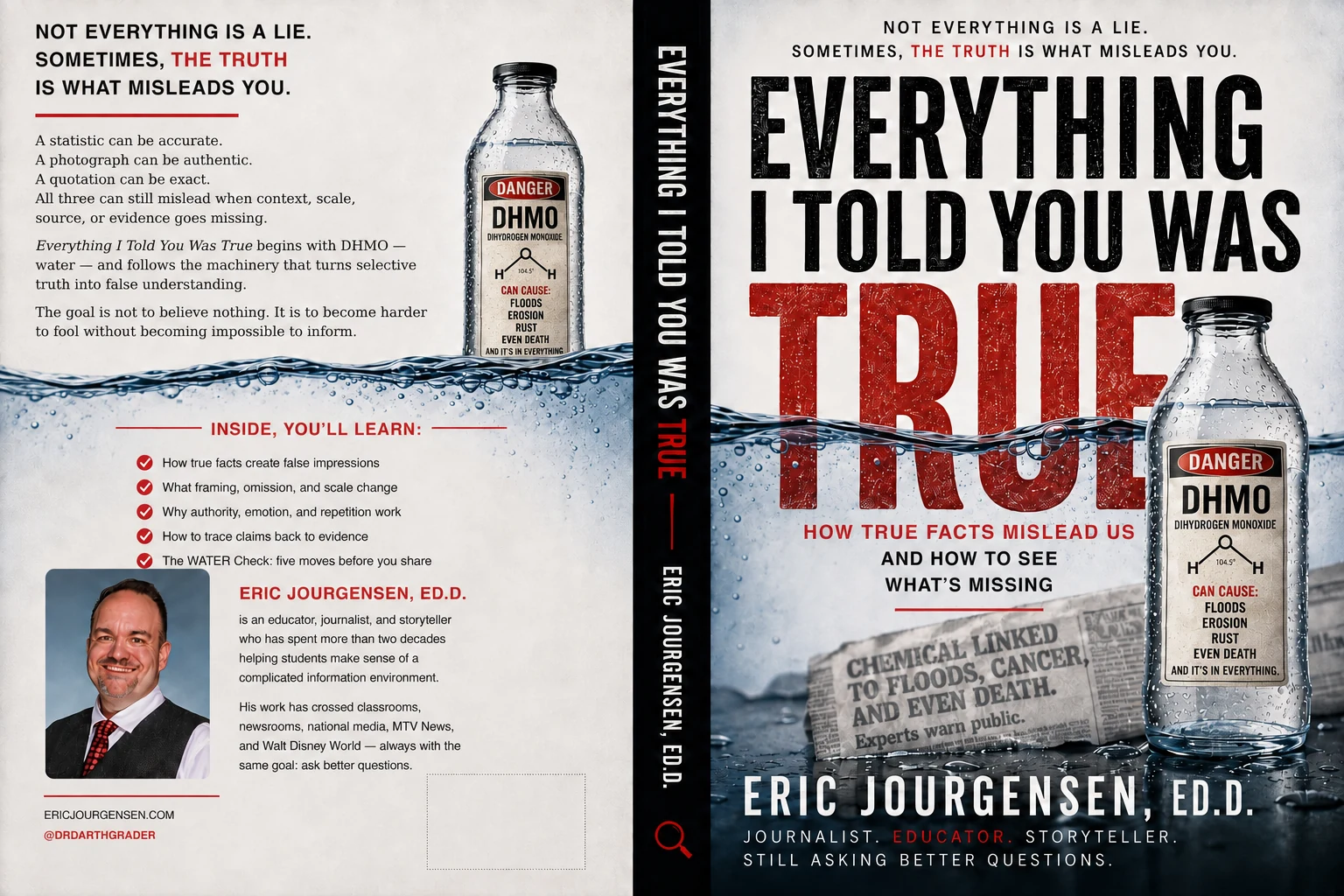
True is not the same as truthful.
Framing
How selection, language, crops, time windows, and missing context shape the story we think we received.
Credibility
Why expertise, verification badges, institutional authority, and polished presentation are signals that still require evidence.
AI & synthetic media
How generative systems change the speed and scale of confident misinformation while leaving older human vulnerabilities intact.
Selection creates meaning.
No communicator can tell you everything. The question is what was selected, what was omitted, and whether the result earns the conclusion.
What am I missing?
Not “what are they hiding?” Start with curiosity, not accusation.
The argument grew out of a life spent around stories.
Journalism taught me that facts need context. Photography taught me that the frame always excludes something. Broadcasting taught me that timing, sound, sequencing, and presentation change how information feels. The early internet taught me what happens when distribution outruns old gatekeepers. Teaching taught me how quickly authority, familiarity, emotion, repetition, and presentation can influence belief.
Popular culture added another layer. Long before most people study “media literacy,” they have already learned heroes and villains, point of view, canon, archetypes, continuity, persuasion, and audience expectation from the stories they love.
Those experiences did not point toward a conventional autobiography. They pointed toward one recurring problem: a story can contain true information and still lead an audience somewhere false.
Now tell me where it breaks.
If you have read, reviewed, taught from, or simply explored EITYWT, I want the useful version of your reaction: what landed, what confused you, what is missing, and what should change.
Candor beats applause.
The feedback survey also lets adult respondents separately choose whether any comments may be quoted publicly. Feedback is valuable either way.
Give EITYWT feedbackKeep asking good questions.
Essays about teaching, writing, evidence, and the stories that shape us. Follow the work behind WATER, Everything I Told You Was True, and The Chronicle Keepers.
Read the next essay.
Subscribe on Substack for new essays and project updates. Choose a free subscription and unsubscribe whenever you like.
Subscribe to Life Between the LessonsTwo ways into the same question.
The extended edition develops the argument behind EITYWT. The pocket-guide version focuses on practical use. These remain publishing projects; neither is offered for purchase here.
Start with a free activity.
Try the WATER routine, then explore the developing middle school, high school, and introductory college course designs.
Try It With Your Students